Small-Batch Apple Crumble for Two
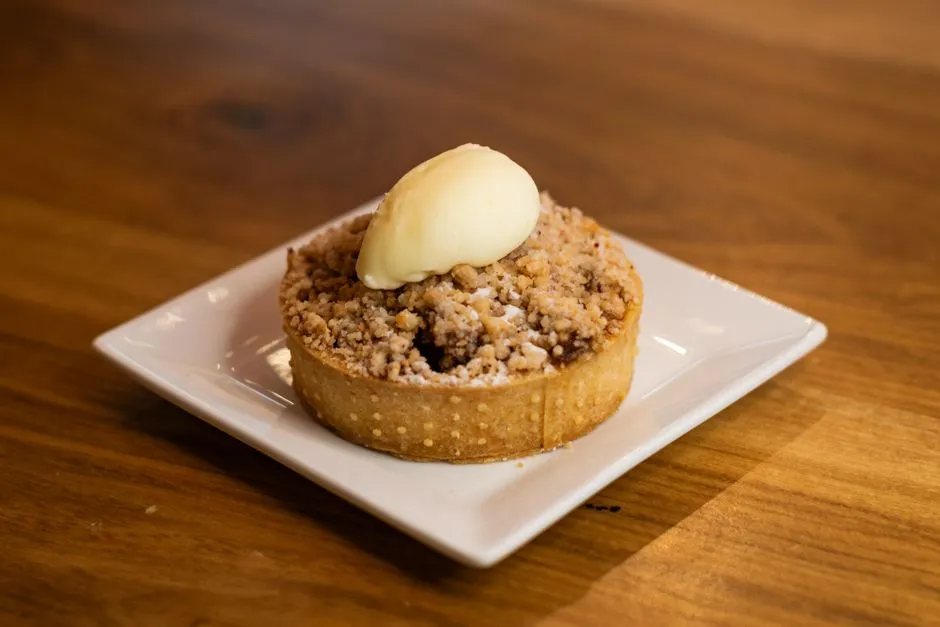
Make dessert for tonight, not a small conference
This apple crumble is sized for a 6-inch round baking dish and yields two generous portions or three smaller ones. The filling starts with 300 g of apple after peeling and coring. Oats give the topping texture, while melted butter helps it form craggy little clusters instead of a floury blanket.
Find more modestly scaled sweets in small-batch baking.
Pick an appropriately sized baking dish
Choose an oven-safe 6-inch (15 cm) round dish that holds about 4 cups (1 liter) and stands roughly 2 inches (5 cm) deep. Capacity matters: 300 g of sliced apple comes to nearly 2 3/4 cups on its own, and the loose topping adds most of another cup, so a shallow 2-cup dish overflows during assembly. A dish of another shape works when its capacity and depth are similar. Set it on a sheet pan before baking so an energetic fruit bubble does not become an oven-cleaning project.
Use an apple variety that keeps at least some structure in the oven. Combining a tart apple with a sweeter one gives a balanced filling, though one baking-friendly variety is perfectly workable. Measure 300 g only after the peels and cores are gone, since neither belongs in the finished dish and both distort the weight.
Gather the ingredients
For the fruit layer:
- 300 g peeled and cored apple, sliced about 1/4 inch (6 mm) thick
- 1 tablespoon (13 g) granulated sugar
- 1 teaspoon (5 ml) lemon juice
- 1 teaspoon (3 g) cornstarch
- 1/2 teaspoon ground cinnamon
- one small pinch of fine salt
For the topping:
- 1/3 cup (30 g) old-fashioned rolled oats
- 1/4 cup (30 g) all-purpose flour
- 2 tablespoons packed (25 g) brown sugar
- 1/8 teaspoon fine salt
- 2 tablespoons (28 g) unsalted butter, melted and slightly cooled
For the dish:
- about 1 teaspoon softened unsalted butter, or a neutral oil
Review the labels on every packaged ingredient for allergens and cross-contact relevant to the people eating. Someone avoiding gluten may need appropriately certified oats and a suitable flour blend, along with preparation that prevents cross-contact. A substitute flour can also change how the topping absorbs fat and crisps.
Coat the apples evenly
Place an oven rack in the middle and preheat to 375°F (190°C). Grease the baking dish lightly with softened butter, which browns agreeably where the sugary filling meets the wall. Neutral oil works and tastes cleaner; cooking spray works too, applied thinly, since a heavy coat pools and fries the bottom edge.
Add the sliced apple, white sugar, lemon juice, cornstarch, cinnamon, and pinch of salt to a bowl. Toss until the fruit is evenly coated and no white patches of starch remain. Tip the apples and all collected juice into the dish, then spread the slices into a reasonably even layer without packing them down.
The listed cornstarch amount is part of this recipe's balance. A heaped bonus spoon can make the filling gluey, while leaving it out may give especially juicy apples little help thickening.
Mix the crumble until small clusters appear
In the emptied mixing bowl, combine the oats, flour, brown sugar, and topping salt. Drizzle over the melted butter. Work everything together with a fork until the dry ingredients are moistened and the mixture holds in small, uneven clumps.
Distribute those clumps loosely over the fruit. Resist pressing them into a solid cap; open spaces let steam escape and create more crisp edges. If dry flour is still visible, mix longer before deciding the bowl needs more butter — the gram weights are already balanced for this quantity of topping.
Bake for color, bubbles, and tender fruit
Put the filled dish on the waiting sheet pan and bake for 28 to 35 minutes. Check for three signs: the topping has browned, juices are bubbling near the center rather than only at the rim, and a slim knife meets little resistance in an apple slice.
Dish shape and apple variety can shift the timing. When the topping colors before the fruit is tender, cover the dish loosely with foil and continue baking. Let the finished crumble stand for at least 10 minutes before serving; the juices thicken during the pause, and hot apple is remarkably good at ambushing an impatient mouth.
Serve warm, then refrigerate leftovers within two hours
Divide the crumble between the waiting bowls. Yogurt, whipped cream, or ice cream can join in, though the crumble is perfectly good on its own.
Get leftovers into the refrigerator within 2 hours of the dish leaving the oven, and within 1 hour if the room is warmer than 90°F (32°C). The 10-minute rest and the time at the table both count toward that window. Transfer the leftovers to a covered container, refrigerate at 40°F (4°C) or below, and eat them within 3 to 4 days.
Add perishable toppings by the portion rather than to the whole dish. Whipped cream and yogurt fall under the same 2-hour limit and should also be used by the date on their own packaging, whichever comes first; ice cream goes back to the freezer at 0°F (-18°C) as soon as it is scooped. Discard any portion that sat out longer than those windows, or whose time and temperature history you cannot account for. To reheat, warm a portion in the oven until it is steaming hot throughout, 165°F (74°C) on an instant-read thermometer, which also gives a crisper topping than the microwave manages.
Pair dessert planning with the crispy chickpea sheet-pan dinner, or browse weeknight cooking when the savory half of the evening still needs a plan.